Plaque—a sticky film of bacteria—feeds on sugars and starches left on your teeth. As it breaks those foods down, it produces acids that erode tooth enamel. Over time, this can lead to tooth decay and eventually a cavity (a hole in the tooth). Anyone can be affected, from very young children to older adults, and diet plays a major role in risk.
The good news? Tooth decay is largely preventable with a few consistent habits and smart choices. Below are 10 healthy, dentist-approved ways to keep plaque under control, protect your enamel, and maintain a confident, cavity-free smile.
How can I prevent tooth decay?
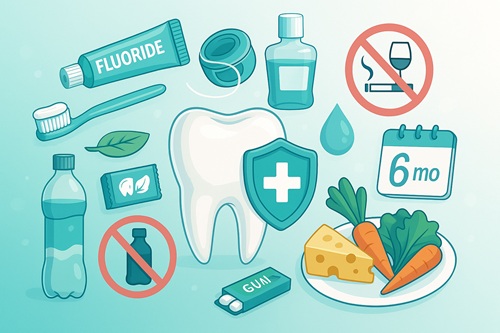
Brush twice daily with fluoride toothpaste, floss once a day, rinse with an alcohol-free fluoride mouthwash, limit sugary/acidic foods and drinks, drink plenty of water, chew sugar-free gum, eat a tooth-friendly diet, avoid smoking and excess alcohol, ask your dentist about sealants, and book a check-up every six months.
1) Brush with Fluoride Toothpaste Twice a Day
Why it matters:
Brushing removes plaque and food debris before bacteria can produce acid. Fluoride strengthens enamel, making it more resistant to decay and even helping remineralise early weakened areas.
How to do it right:
-
Use a soft-bristled brush and a pea-sized amount of fluoride toothpaste (for children under 6, use a rice-grain smear and supervise).
-
Brush twice daily for two minutes—morning and bedtime.
-
Angle the brush at 45° to the gumline and use small circular motions; don’t scrub aggressively.
-
Don’t forget the tongue and the back teeth, where decay often starts.
Pro tip:
Wait 30 minutes after acidic foods/drinks (e.g., soft drinks, citrus) before brushing to avoid brushing softened enamel.
2) Floss Daily (Yes, It’s Non-Negotiable)
Why it matters:
Toothbrush bristles can’t reach the tight spaces between teeth. That’s where floss shines, removing plaque from areas that cause many cavities and gum problems.
How to do it right:
-
Use about 45 cm of floss, wrap most around one finger and the rest around the opposite finger.
-
Gently glide between teeth; curve the floss in a C-shape around each tooth and slide under the gumline.
-
Floss once daily, ideally before bed.
Alternatives:
If traditional floss is tricky, try floss picks, interdental brushes, or a water flosser—the best tool is the one you’ll use consistently.
3) Rinse with a Fluoride Mouthwash
Why it matters:
A fluoride mouthwash reaches areas brushing and flossing might miss, delivering extra enamel protection and helping reduce cavity-causing bacteria.
How to do it right:
-
Choose an alcohol-free fluoride rinse to avoid dry mouth.
-
Swish for 30–60 seconds, once or twice daily.
-
Don’t rinse with water immediately afterward—let fluoride keep working.
Timing tip:
If possible, use mouthwash at a different time than brushing (e.g., after lunch) for more frequent fluoride exposure across the day.
4) Cut Back on Sugary and Acidic Foods & Drinks
Why it matters:
Sugar feeds plaque bacteria; acid (from soft drinks, energy drinks, citrus, vinegar) weakens enamel. The frequency of exposure often matters more than the total amount—sipping all day keeps acids attacking teeth.
Smart swaps & strategies:
-
Keep sugary snacks to mealtimes (more saliva then, which neutralises acid).
-
Replace soft drinks and fruit juices with water or unsweetened options.
-
If you do indulge, finish in one sitting rather than grazing for hours.
-
Use a straw for acidic drinks and rinse with water after.
Label check:
Watch for “hidden sugars” like sucrose, glucose, fructose, corn syrup, honey, and concentrates in sauces, cereals, and snacks.
5) Hydration: Water Is Your Smile’s Best Friend
Why it matters:
Saliva is your mouth’s natural defence, neutralising acids and washing away food particles. Dehydration and dry mouth (xerostomia) increase cavity risk.
Everyday habits:
-
Carry a refillable water bottle and sip regularly.
-
If your local water is fluoridated, that’s an extra win for enamel.
-
Address dry mouth triggers: some medications, mouth-breathing, alcohol, and caffeine can reduce saliva. If needed, ask your dentist about saliva substitutes or xylitol lozenges.
Red flags:
Morning “cotton mouth,” sticky saliva, or difficulty swallowing dry foods may signal low saliva—bring it up at your next check-up.
6) Chew Sugar-Free Gum (Especially After Meals)
Why it matters:
Chewing sugar-free gum for 10–20 minutes after eating stimulates saliva, helps neutralise acids, and can reduce plaque. Gum with xylitol additionally slows certain decay-causing bacteria.
What to choose:
Look for products labelled sugar-free or xylitol-sweetened. Avoid gums with sugar or syrups.
When to skip:
If you have jaw pain or TMJ issues, ask your dentist before making gum a daily habit.
7) Eat a Tooth-Friendly Diet
Why it matters:
Nutrition shapes oral health. Certain foods actively protect teeth while others encourage decay.
Tooth-friendly choices:
-
Dairy (milk, cheese, yoghurt): calcium and casein help remineralise enamel.
-
Leafy greens, almonds, sesame seeds: mineral-rich, low in sugar.
-
Crunchy veg (carrots, celery, cucumbers): stimulate saliva and help scrub surfaces.
-
Lean proteins and eggs: support tissue repair.
-
Whole grains and legumes: provide sustained energy without sugar spikes.
Limit:
-
Sticky sweets (toffees, gummies) that cling to grooves and between teeth.
-
Refined starches (chips, crackers) that break down into sugars and lodge in crevices.
-
Frequent fruit juice—it’s acidic and concentrated in sugar; eat whole fruit instead.
8) Avoid Smoking and Go Easy on Alcohol
Why it matters:
Smoking and vaping harm gums, reduce blood flow, slow healing, and can dry the mouth—raising the risk of decay and gum disease. Excess alcohol similarly dries the mouth and often comes with sugary mixers or acidic wines.
Action steps:
-
If you smoke, talk to your GP or dentist about cessation support (nicotine replacement, counselling, apps).
-
Choose alcohol-free or low-sugar options and drink water alongside.
-
Maintain meticulous daily hygiene if you use nicotine products.
9) Ask Your Dentist About Sealants
What they are:
Dental sealants are thin protective coatings applied to the chewing surfaces of back teeth (molars and premolars). These grooves are where many cavities start—especially in children and teens.
Why they work:
Sealants block food and bacteria from settling in deep fissures, making those surfaces easier to clean.
Who benefits:
-
Children and teenagers: shortly after molars erupt.
-
Adults with deep grooves or early enamel changes but no decay.
Good to know:
Sealants are quick, painless, and can last several years with proper care. They complement (not replace) brushing, flossing, and fluoride.
10) See Your Dentist Every 6 Months
Why it matters:
Regular check-ups and professional cleans remove hardened plaque (calculus) you can’t remove at home. Dentists also detect early decay, gum inflammation, enamel wear, and bite issues before they become painful or costly.
What to expect:
-
A thorough exam of teeth, gums, and bite.
-
X-rays when indicated to spot issues between teeth or under fillings.
-
Personalised advice (e.g., fluoride varnish, desensitising treatments, sealants).
-
A clean and polish to reduce stain and bacterial load.
If you’re high-risk:
You may benefit from three- or four-monthly cleans, prescription-strength fluoride toothpaste, or specific remineralising products. Ask your dentist for a tailored plan.
Bonus: Build a Decay-Proof Daily Routine (Sample)
Morning
-
Brush with fluoride toothpaste (2 minutes).
-
Rinse with water; skip immediate mouthwash to keep fluoride on teeth.
-
Drink water; have a tooth-friendly breakfast (e.g., yoghurt + berries, eggs + greens).
Midday
-
If you can’t brush, chew sugar-free gum after lunch.
-
Keep water on hand; limit snacking.
Evening
-
Floss thoroughly.
-
Brush with fluoride toothpaste (2 minutes).
-
Rinse with fluoride mouthwash (alcohol-free).
-
Water by the bed; avoid late-night snacks and sugary drinks.
Tooth Decay Myths—Busted
-
“Only kids get cavities.” Adults get them too—especially around old fillings and exposed roots.
-
“If my teeth don’t hurt, they’re fine.” Early decay is often painless. Regular exams catch problems sooner.
-
“Harder brushing = cleaner teeth.” Aggressive brushing can erode enamel and recede gums. Gentle, thorough beats hard and fast.
-
“Fruit juice is healthy, so unlimited is okay.” Juice is acidic and sugary—moderation matters, and water is still best between meals.
Frequently Asked Questions
Q1: What type of toothpaste is best for preventing cavities?
Choose a fluoride toothpaste (typically 1000–1500 ppm fluoride for adults). Sensitive teeth may benefit from formulas with stannous fluoride or potassium nitrate—ask your dentist which suits you.
Q2: Electric or manual toothbrush?
An electric toothbrush (oscillating-rotating or sonic) can make effective brushing easier, especially for those with limited dexterity. However, a soft-bristled manual brush used correctly works well too.
Q3: How soon after eating should I brush?
Wait about 30 minutes after acidic meals/drinks to avoid brushing softened enamel. Otherwise, brushing promptly is fine—just be gentle.
Q4: Can I reverse a cavity naturally?
You can remineralise very early enamel lesions with fluoride, diet changes, and excellent hygiene. Once a cavity forms (a physical hole), it needs professional treatment.
Q5: Do whitening products increase cavity risk?
Most over-the-counter whiteners don’t cause cavities, but they can increase sensitivity. Maintain your fluoride routine and discuss safe options with your dentist.